Strength Equipment Names: A Commercial Gym Glossary
Strength equipment names explained: free weights vs machines, plate-loaded vs selectorized, push, pull and leg machines, racks, benches and the monolift.
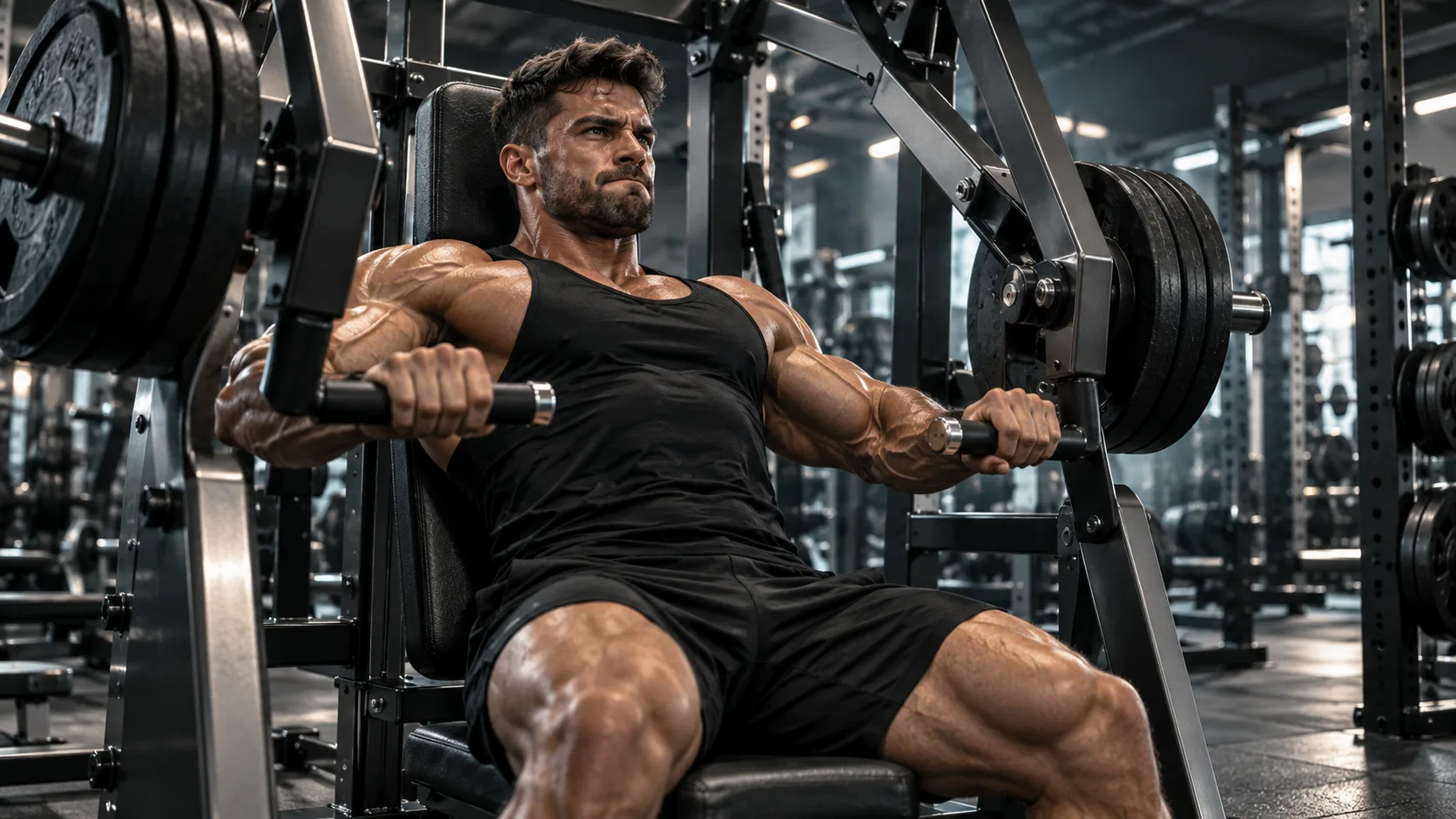
The main strength equipment names in a commercial gym are free weights (barbells, dumbbells, plates), plate-loaded and selectorized machines for push, pull and leg work, racks (squat rack, power rack, Smith machine, monolift) and benches.
Walk onto a commercial gym floor and the equipment rarely has its generic name stamped on it: a rep calls it a "chest press station," a supplier's spec sheet calls it a "sitting chest press machine," and a buyer searching online just types "gym machine names." This glossary closes that gap. It sorts strength equipment by the two things that actually decide a purchase (how it's built and what it moves), so an owner or facility manager can walk a showroom or a catalogue and know exactly what they're looking at.
Free Weights vs. Machines: The First Split Every Buyer Makes
Every strength floor is really two different tools working together. Free weights (barbells, dumbbells and weight plates) let a lifter control the full path of the movement, which builds stabiliser strength but demands more coaching and floor supervision. Machines guide the movement along a fixed or semi-fixed track, which is why most commercial floors lean on them for member throughput: a new member can load a leg press or a chest press safely with a five-minute induction, where a barbell back squat needs real coaching time. Neither replaces the other; a floor plan built around only one or the other tends to under-serve either the confident lifters or the walk-in members. Gym Factory's own 180+ SKU range reflects that split: dedicated machine lines for push, pull, and leg movements, alongside a genuine free-weights range (Olympic plates, bumper plates, and dumbbell sets with racks).
Plate-Loaded vs. Selectorized: The Construction Term Every Spec Sheet Uses
This is the distinction that trips up most first-time buyers, and it's worth knowing before reading any equipment spec sheet. A plate-loaded machine has open pegs where the user slides on standard Olympic weight plates to set the resistance: it takes up less footprint, tends to run a higher maximum load, and is generally the cheaper build because there's no internal weight stack to manufacture. A selectorized machine has its own enclosed weight stack built in, and the user sets resistance by moving a pin: faster for circuit training and drop sets, but bulkier and typically capped at a lower top-end load than a plate-loaded equivalent. Manufacturers commonly run both formats side by side across a single catalogue rather than committing to one: Gym Factory, for example, manufactures both plate-loaded machines and selectorized stack machines across its 180+ SKU range (its warranty terms even name "weight plates in selectorized machines" as a covered structural component). Commercial gyms typically stock a mix: selectorized for beginner-friendly circuit stations, plate-loaded where members expect to load heavy.
Push Machines: Chest, Shoulders, Triceps
"Push" equipment covers anything that trains a pressing motion away from the body. The core names to know: a chest press machine (seated or standing) targets the pectorals in a horizontal pressing path. Gym Factory's range alone spans a chest press, an incline chest press, a decline chest press, and a standing chest press, each angling the same movement differently to hit the chest from a different line. A pec fly machine (sometimes called a "pec deck") isolates the chest through an arcing, non-pressing motion rather than a push. A shoulder press machine does for the deltoids what a chest press does for the pecs, and a lateral raise machine isolates the side deltoid through an abduction path rather than a press. Further down the chain, a triceps pushdown or triceps machine isolates the back of the arm. One more push-category term worth flagging: a Smith machine, a barbell fixed to vertical rails so it only travels in a straight vertical line, is a hybrid that behaves like guided free weight, and Gym Factory lists several Smith machine configurations within its press range.
Pull Machines: Back, Lats, Biceps
"Pull" equipment trains the back, lats, rear shoulders, and biceps through a rowing or pulling path. A lat pulldown machine trains a vertical pulling motion (bar coming down to the chest), while a row machine or seated row machine trains a horizontal pulling motion (handle coming back toward the torso). The two are often confused but train different planes. A cable crossover machine, a dual-adjustable pulley tower with a cable stack on each side, is the most versatile pull-category piece on a commercial floor because the pulley height and angle can be changed to reproduce dozens of different pulling (and pushing) exercises from one station; Gym Factory's Cable Crossover range is built around that dual-pulley design. Other pull-category names worth knowing: a T-bar row machine (a fixed-pivot barbell row), a pullover machine (an overhead-to-hip arc that trains the lats through extension rather than a row), and a trap/deadlift or shrug machine, which guides a vertical shrugging or hip-hinge pull rather than a free bar.
Leg and Lower-Body Machines
Lower-body equipment covers both compound movements and more targeted isolation work. A leg press machine lets the user train the quadriceps through a guided pressing movement, with additional involvement from other lower-body muscles depending on setup and technique, making it a core station on many commercial strength floors. A hack squat machine serves a different purpose, guiding the user through a supported squat pattern rather than a pressing movement. Gym Factory also offers a combined leg press and hack squat machine (Gym Factory D1-D2 Leg Press and Hack Squat Machine) for facilities that want both movement patterns within one station.
A leg extension machine isolates the quadriceps through knee extension, while a leg curl machine, whether seated or lying, targets the hamstrings through knee flexion. Combined leg extension-and-curl machines can bring both movements into a single station. Calf raise machines provide dedicated calf training, while glute and hip-focused machines, including abductor and adductor movements, extend the lower-body setup beyond the main quad and hamstring stations.
Racks and Lifting Stations
Racks form their own part of the strength floor because they support free-weight and bodyweight training rather than providing a fixed machine movement. A squat rack provides an open setup for barbell squats, presses and related lifts, while a power rack adds a more enclosed frame with adjustable safety positions for heavier or more varied training. Gym Factory's range includes both squat racks and several power rack configurations.
A power tower provides dedicated stations for movements such as pull-ups, dips and leg raises within one structure, making it useful for bodyweight strength work. At the more specialised end sits the monolift, a piece commonly found in the range of strength- and powerlifting-focused equipment manufacturers, including Gym Factory (BB1 Competition Monolift). Designed primarily for heavy squat training and competition-style setups, it allows the bar supports to move away once the lifter has unracked the bar, removing the need to walk the weight out before beginning the lift.
Racks compared:
| Equipment | What it does | Best for |
|---|---|---|
| Squat rack | Open frame that holds a barbell | Squats and presses with a spotter nearby |
| Power rack | Enclosed four-post frame with safety bars | Heavy training without a spotter |
| Smith machine | Barbell fixed to vertical rails | Guided pressing and squatting |
| Monolift | Supports swing away after unracking | Heavy and competition-style squats |
| Power tower | Stations for pull-ups, dips and leg raises | Bodyweight strength |
Benches and Free Weights
Workout benches support the free-weight side of the gym independently of the rack range. Flat, incline and adjustable benches give users stable positions for dumbbell and barbell exercises, with an adjustable bench covering multiple pressing and training angles within one footprint. A Scott bench, also known as a preacher curl bench, supports the upper arms during curls to create a more controlled biceps movement.
Alongside those benches sit the free weights themselves: Olympic barbells, weight plates, bumper plates and dumbbells, together with the appropriate storage systems. These form the foundation of free-weight training and can be paired with racks and benches to build anything from a compact lifting area to a complete commercial strength floor.