Commercial Gym Equipment Names: The Complete Glossary for Gym Owners
Gym equipment names explained: selectorized, plate-loaded, cable and Smith machines, plus push, pull, leg and cardio machine names and spec sheet terms.
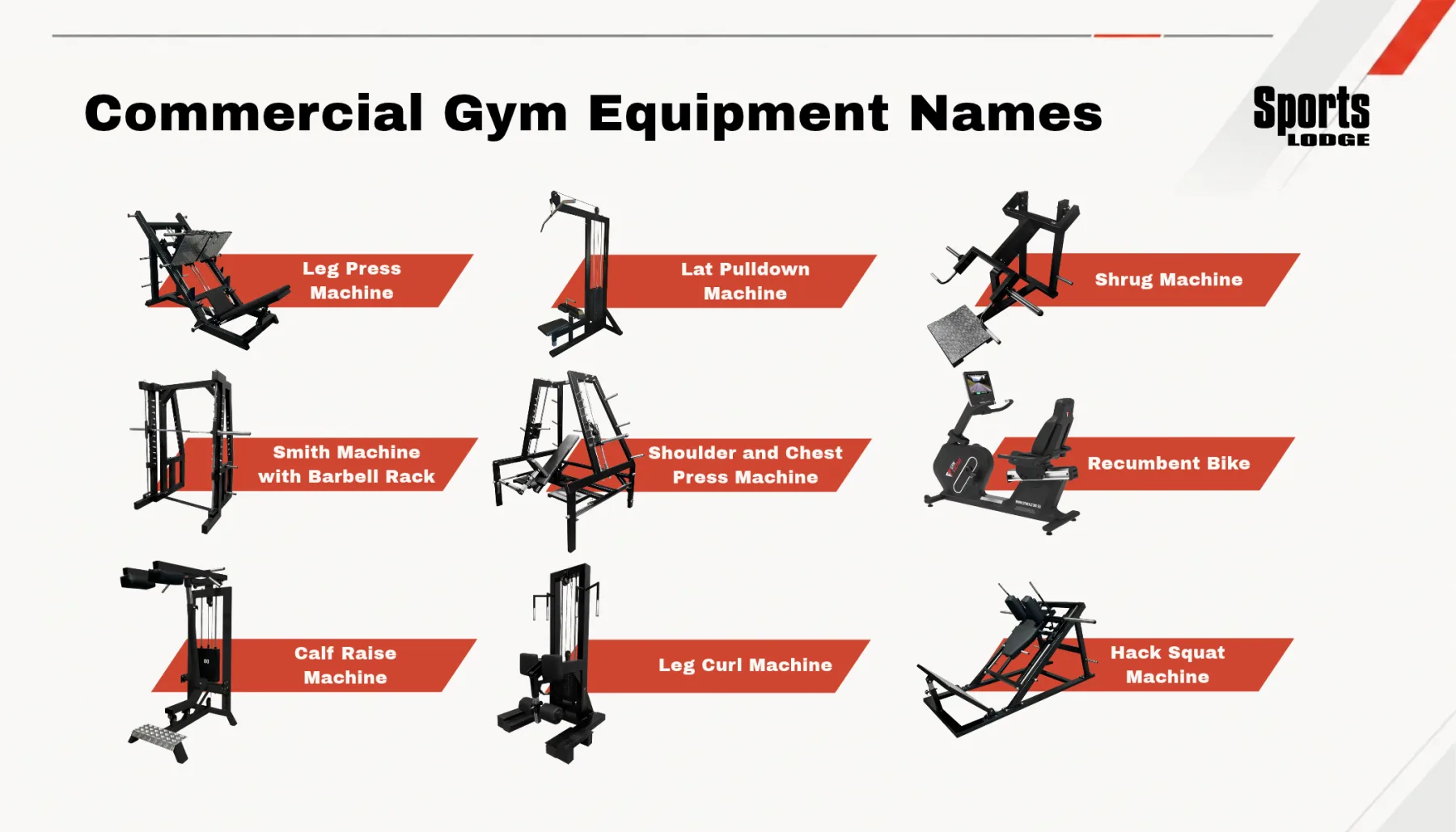
Ask 10 gym owners what to call the machine in the corner, and you will get ten different answers: "lat pulldown," "pulldown machine," "cable pulldown," sometimes just "the pulldown." Manufacturers do not make it easier, the same movement gets a different model name on every spec sheet you open, and that gap is exactly where a quote goes wrong, the wrong attachment gets ordered, or a buyer assumes two machines are the same thing when the steel underneath them is not. This page sorts commercial gym equipment into the names and terms that actually matter, the machine names by category, the construction terms that show up on a supplier's spec sheet, and the jargon- selectorized, plate-loaded, duty rating- that tells you whether a machine belongs on a commercial floor or in a spare bedroom.
Types of Gym Equipment: The Core Construction Types
Before the individual machine names, it helps to know the handful of construction types almost every piece of strength equipment falls into.
- Selectorized machine – the resistance is a built-in weight stack, adjusted by moving a pin. Fast to use and predictable, which is why most high-traffic commercial floors lean on selectorized machines for general members who will never read an owner's manual.
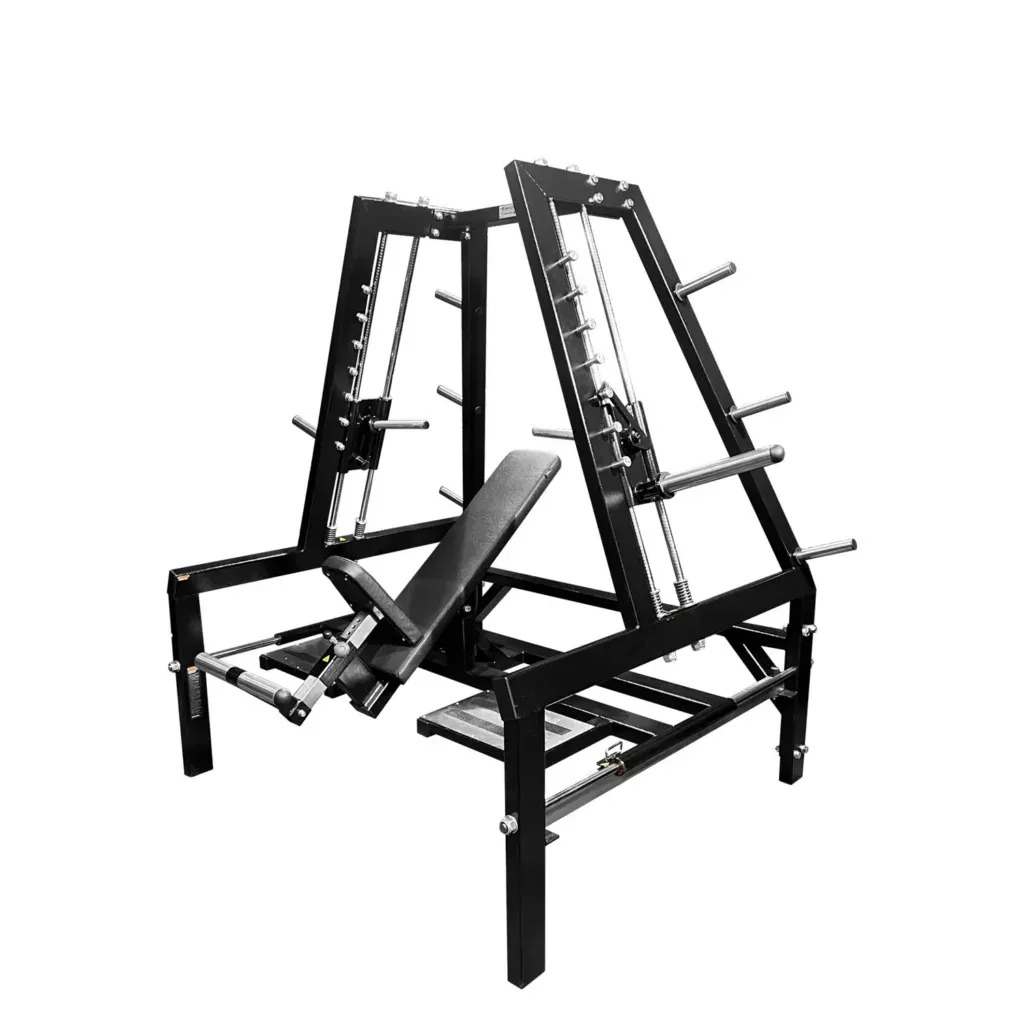
- Plate-loaded machine– the user loads standard Olympic plates onto the machine's own weight horns or handles rather than a barbell, so the resistance curve feels closer to free weights. Gym Factory's B5XX Shoulder and Chest Press Machine is a plate-loaded design with independent handles, so each arm loads and moves on its own, useful when members train unevenly left to right.
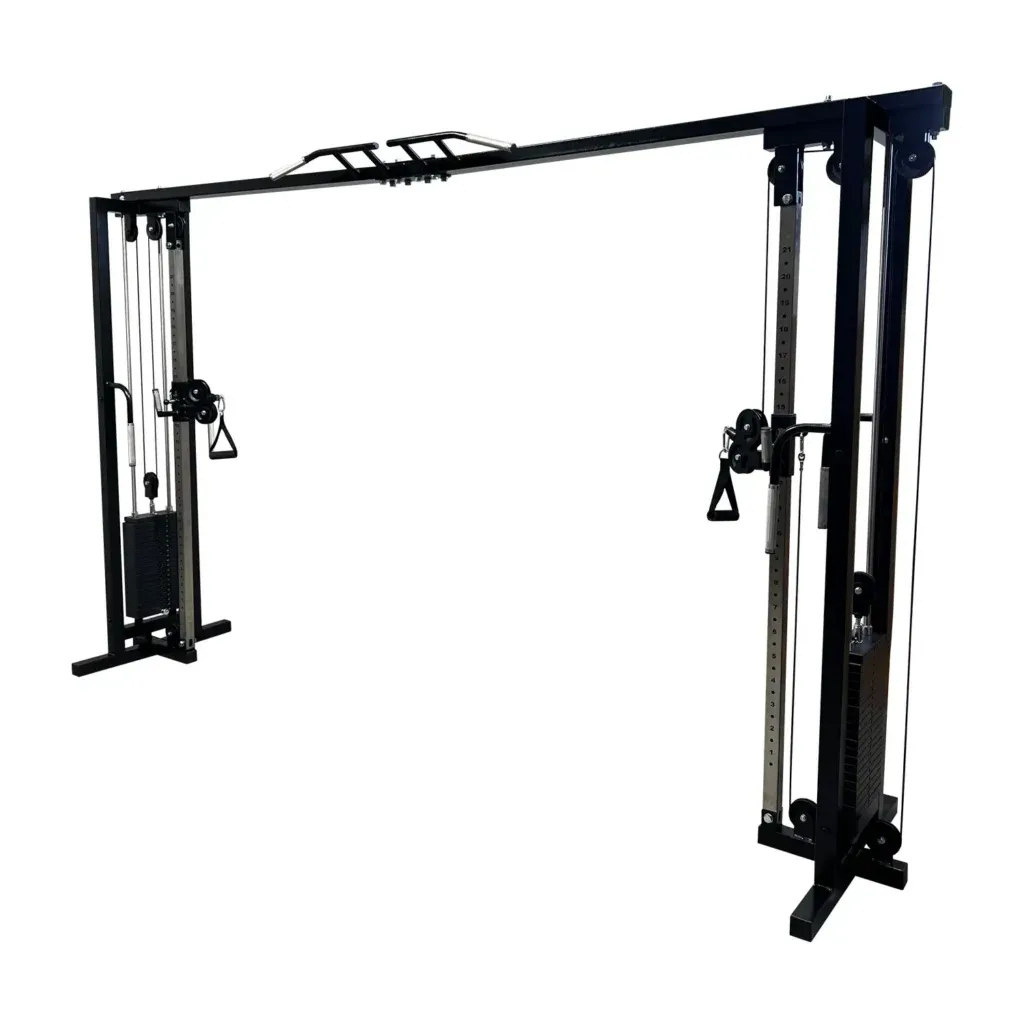
- Cable / pulley machine – resistance runs through a cable-and-pulley system, letting the same station work a wide range of angles and exercises. Gym Factory's C2 Cable Crossover Machine is rated to 385 kg on its heaviest frame, which is the number that matters more than the name once you are comparing two suppliers' crossover stations.
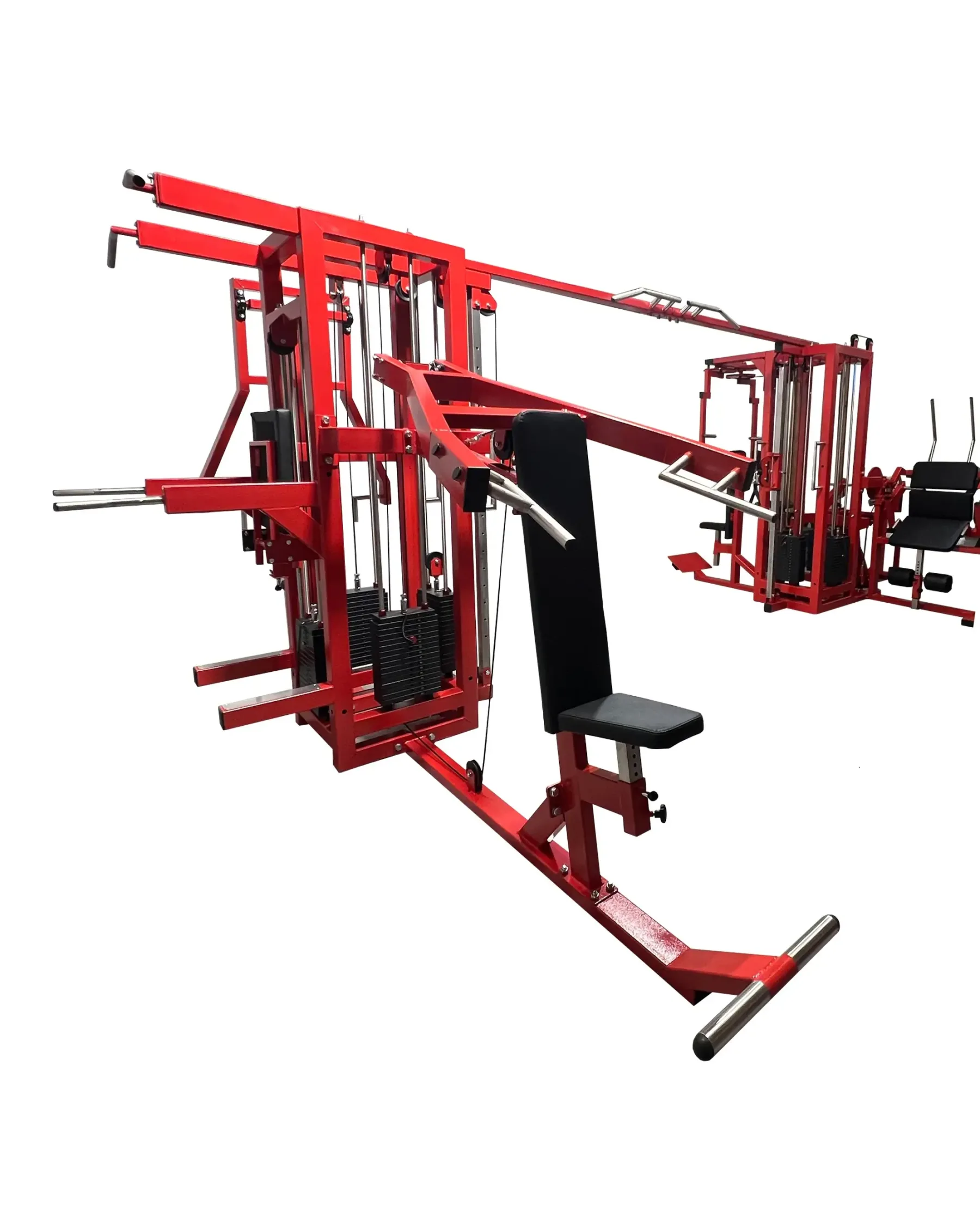
- Multi-station / functional trainer – several cable or pulley stations built into one frame, so more than one person can train at once. Gym Factory's M7X 8-in-1 MultiStation packs cable crossover, pec fly, seated row, chest press, shoulder press, ab crunch and a dip/pull-up assist station into a single footprint, worth knowing before you plan floor space around seven separate machine.
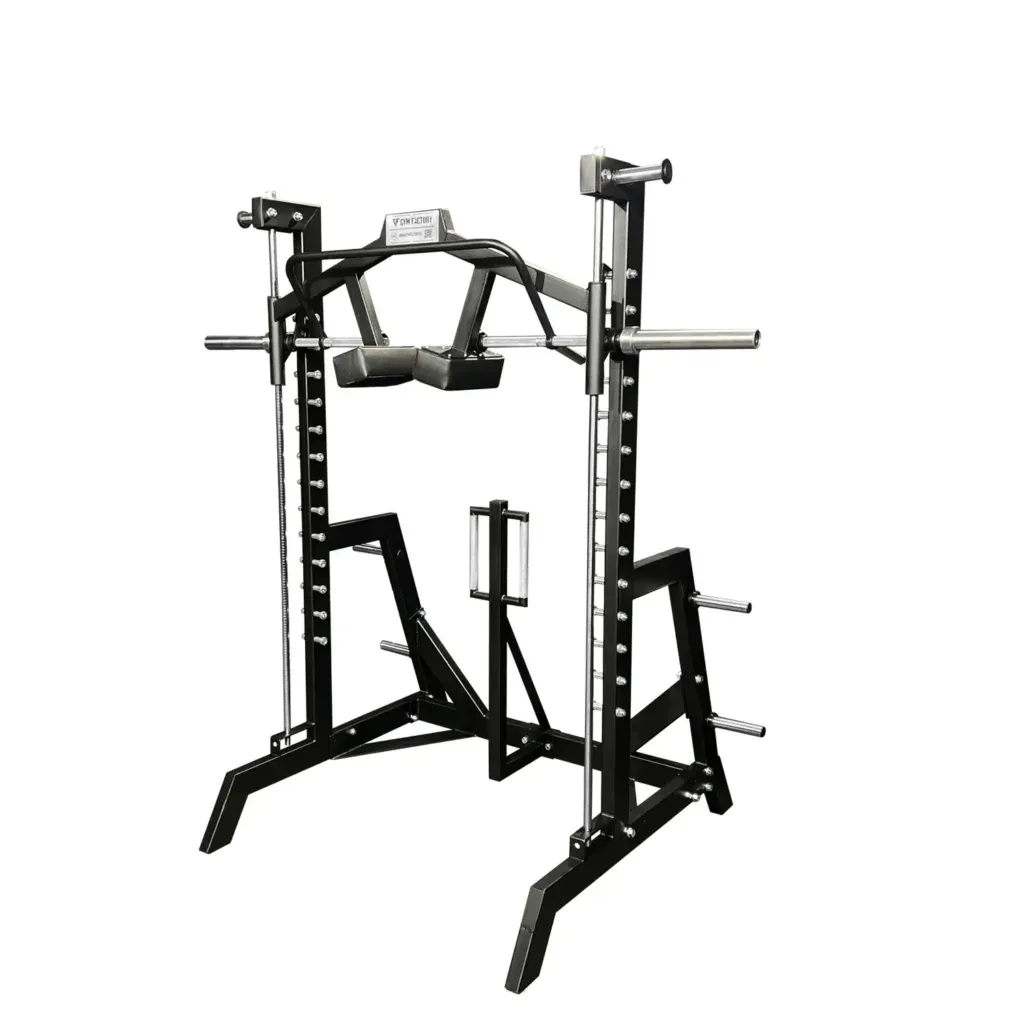
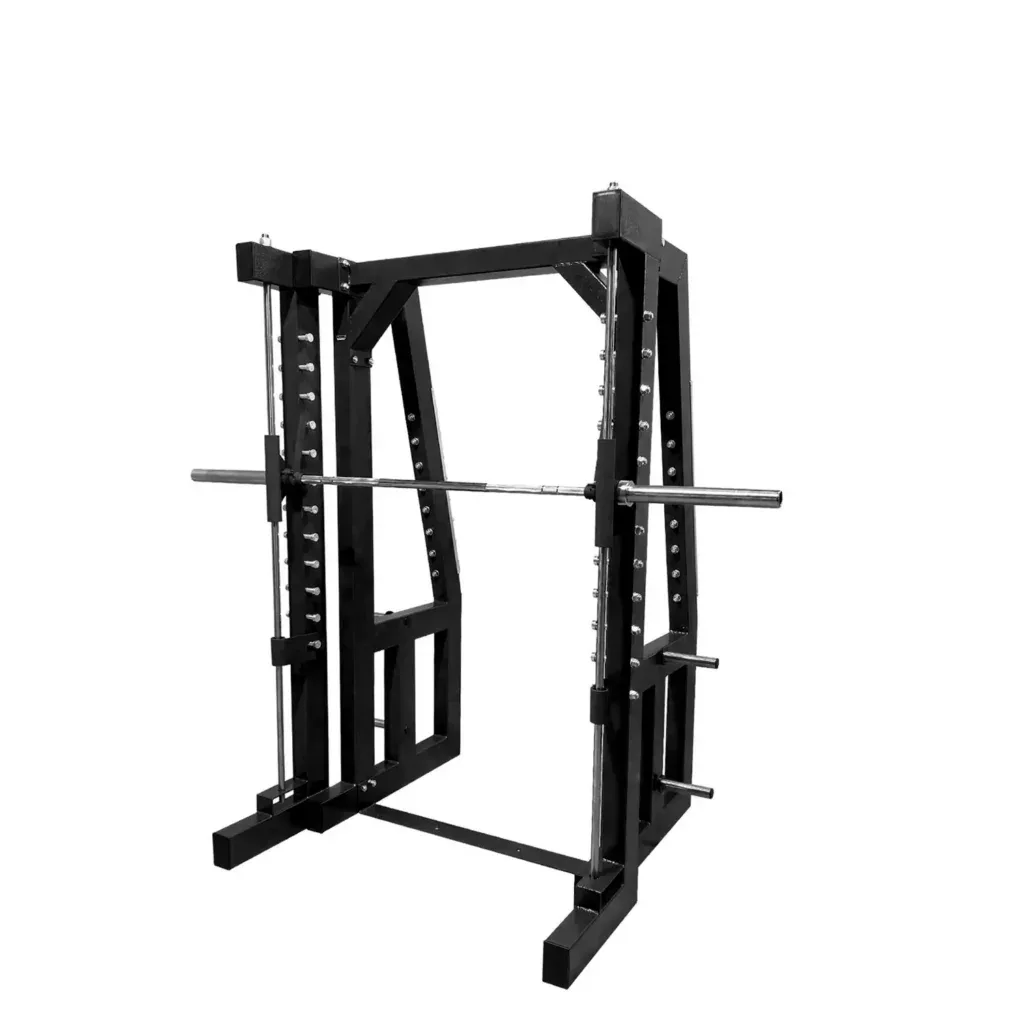
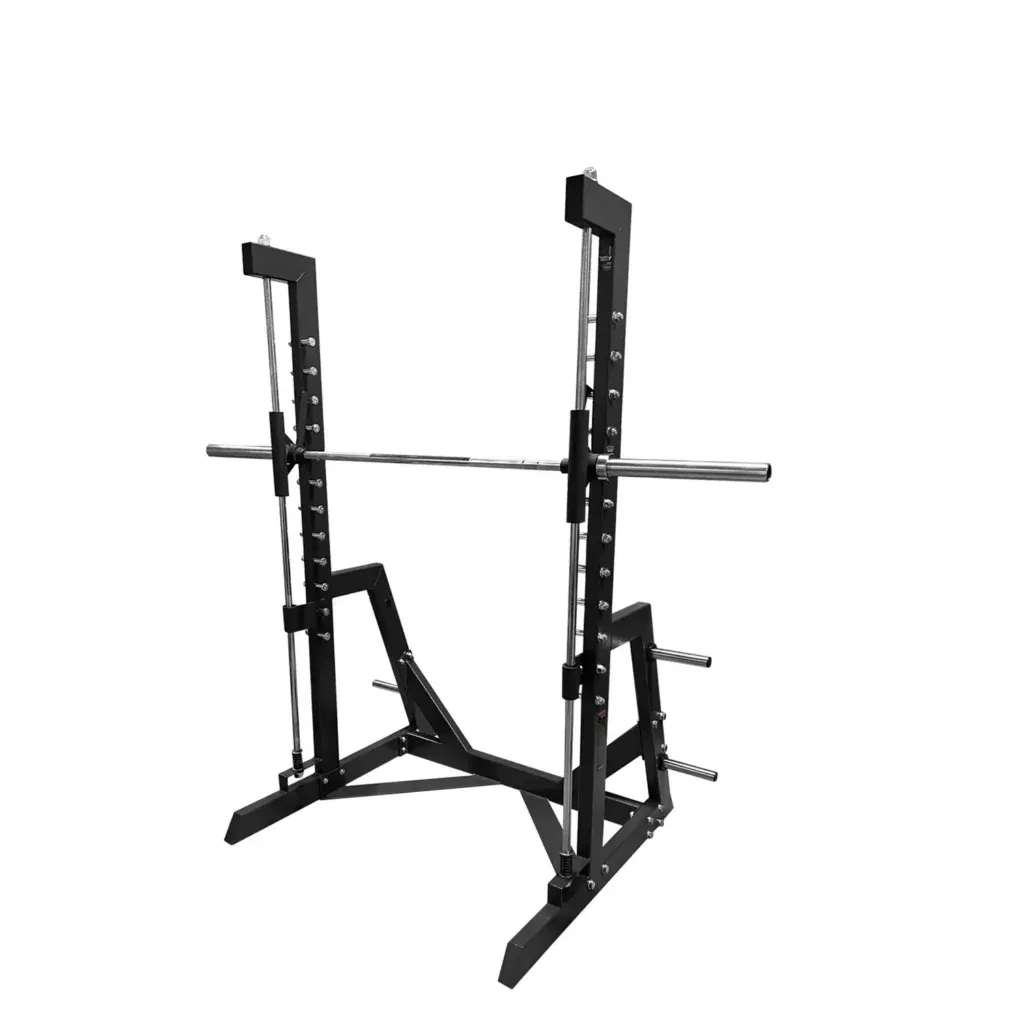
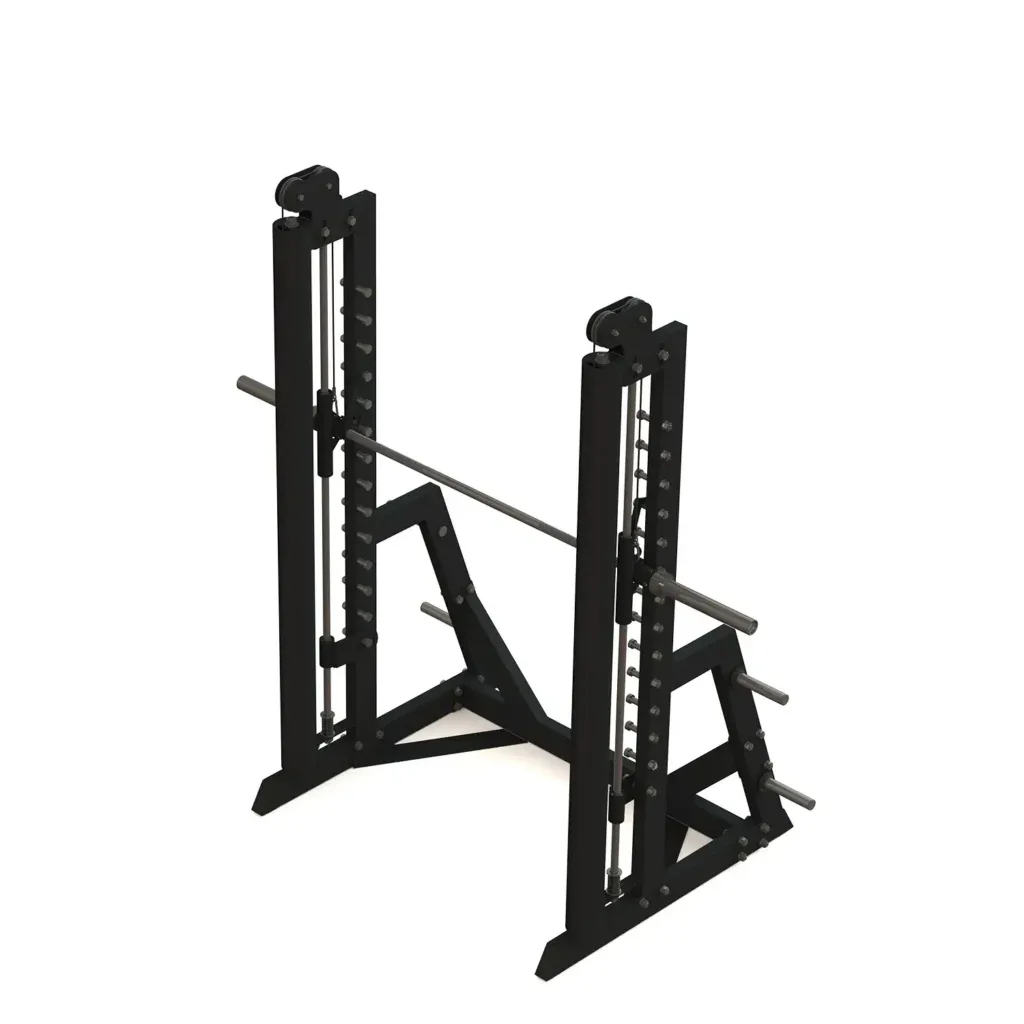
- Smith machine – a barbell fixed to a vertical track so it moves only up and down, removing the need for a spotter on presses and squats. Gym Factory's B5, B5X, B5X2 and B5XP cover this category, four different frames for four different floors.
- Power rack / squat rack – a free-standing steel frame with adjustable hooks and safety arms for barbell work. Gym Factory's B1 Squat Rack is rated up to 550 kg on its heaviest profile, and the B9 Multifunctional Power Rack folds a Smith machine, a pulley block, a dip station and safety spotter arms into the same frame, the difference between buying one rack and buying four stations.
Push Machine Names (Chest, Shoulders, Triceps)
"Push" is gym-industry shorthand for any machine working the chest, shoulders, or triceps, useful for programming and for laying out a floor plan.
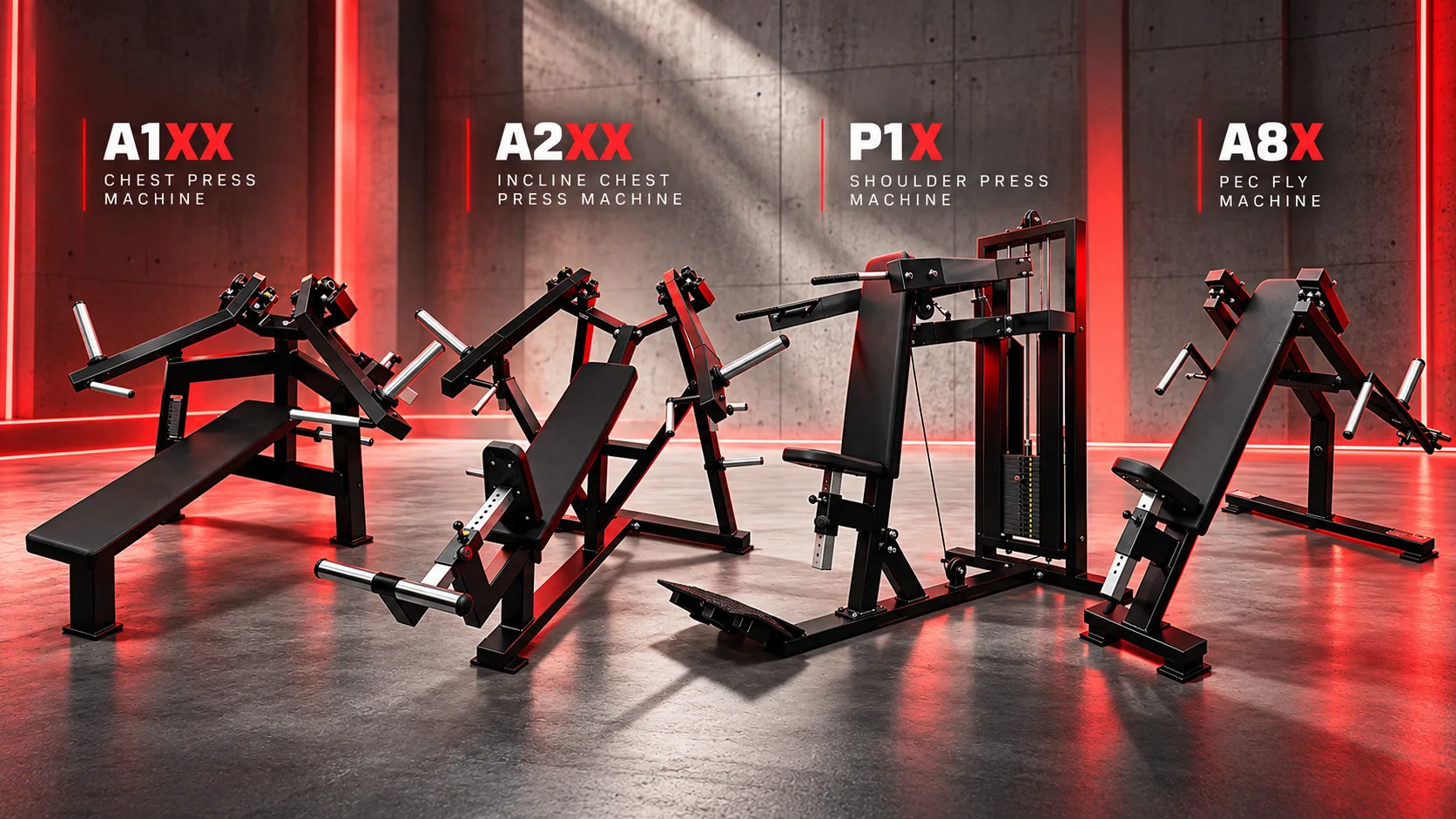
- Chest Press Machine – a seated pressing motion, the most common push station on any commercial floor. Gym Factory's A1XX is rated to 400 kg on its heavier frame, plenty of headroom for a members' floor that never stops moving.
- Incline Chest Press Machine – the same movement on an inclined bench, shifting emphasis to the upper chest. Gym Factory's A2XX adds an adjustable seat position on top of the adjustable handles, so one machine actually fits a range of torso lengths rather than one average.
- Shoulder Press Machine – a seated overhead press with a guided path. Gym Factory's P1X adds an integrated foot platform for stability through the lift, a detail worth checking for when a spec sheet just says "shoulder press" with no mention of how the user is braced.
- Pec Fly Machine – some suppliers list this as a "pec deck," and on a spec sheet that mismatch is exactly how a gym owner ends up quoting the wrong attachment. It isolates the chest through a wide arc rather than a press. Gym Factory's A8X runs dual-function arms for both the forward fly and the reverse rear-delt motion on the same station.
- Triceps Machine – an isolation press or pushdown station for the triceps. Gym Factory's K6X uses a repositionable knee support rather than a seat, worth noting because it changes how much floor space the station actually needs.
Pull Machine Names (Back, Lats, Biceps)
"Pull" covers back, lat, and biceps work, the movement pattern opposite to push, and just as standard a term on equipment lists and PT programming sheets.
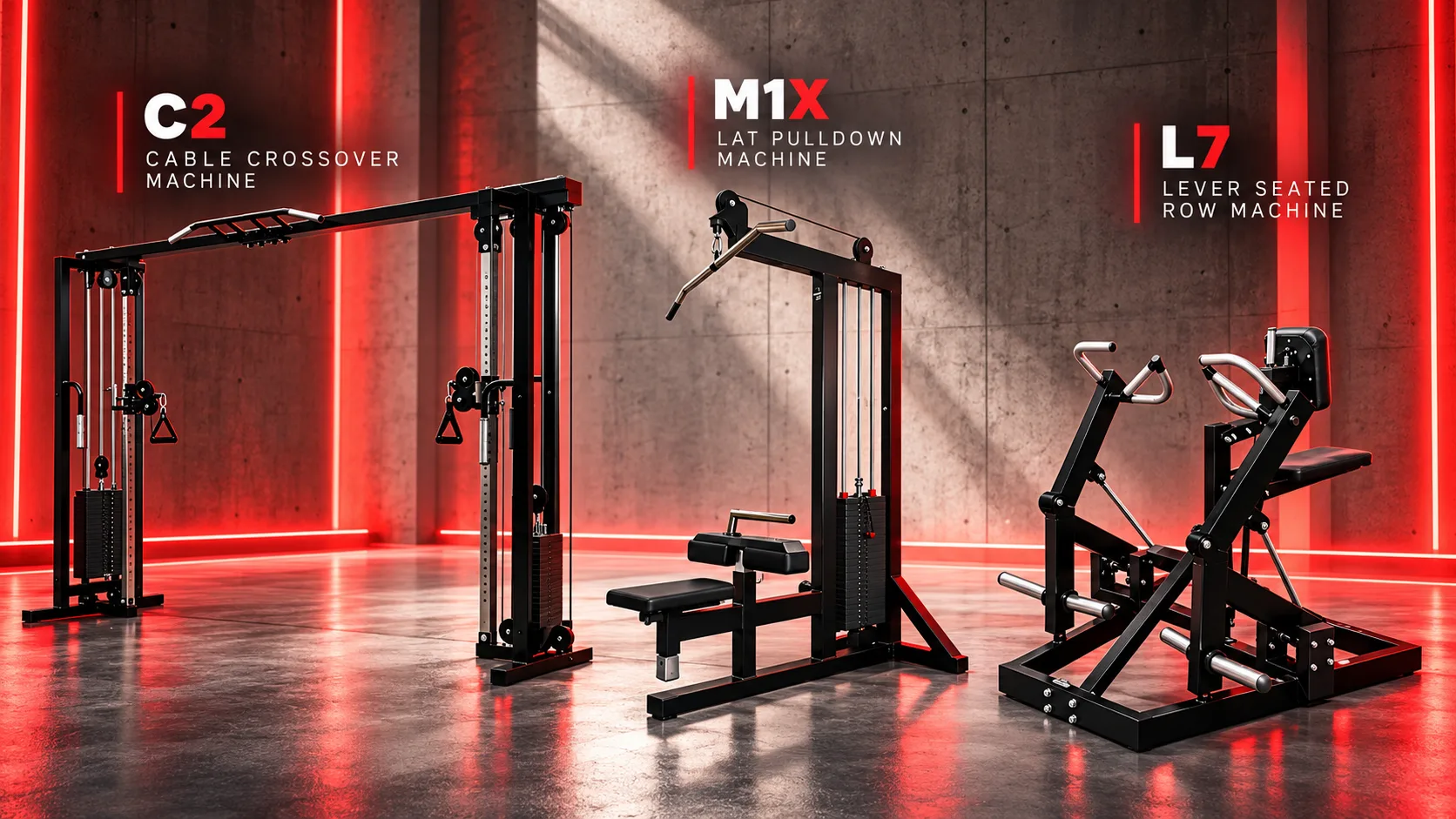
- Cable Crossover Machine – twin adjustable pulleys either side of a frame, used for rows, pulldowns, and a wide range of pulling angles (Gym Factory's C2).
- Row Machine – a seated horizontal pulling motion for the mid-back. Gym Factory's L7 is rated to 500 kg on its heaviest frame, a number worth comparing directly against whatever a competing quote calls "commercial-grade."
- Lat Pulldown Machine – a seated vertical pull from an overhead bar, working the lats (Gym Factory's M1X).
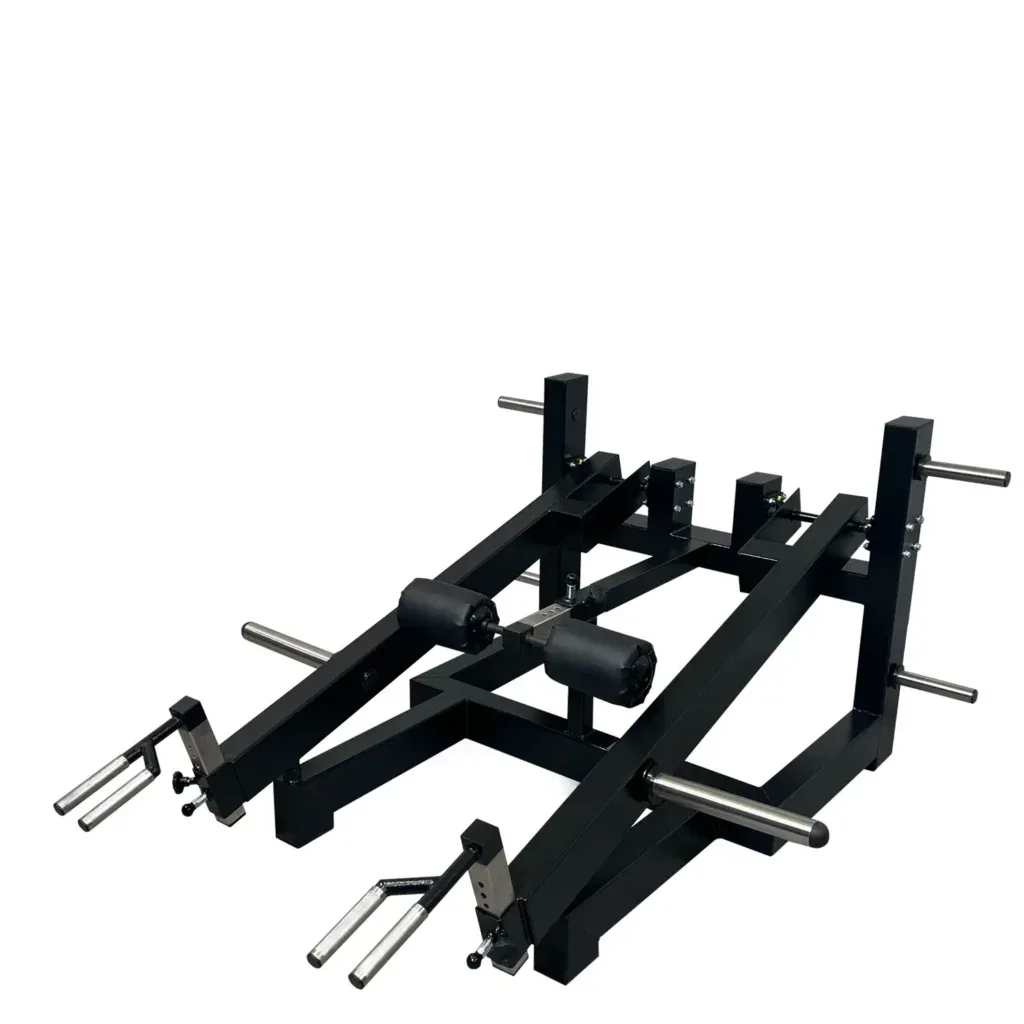
- Trap and Deadlift / Shrug Machine – a guided station for shrugs and trap-focused pulling, sometimes listed simply as a "shrug machine." Gym Factory's G1, G2 and G3 cover slightly different frames and load ratings, so "the shrug machine" on a quote can mean three different things depending which one a supplier actually means.
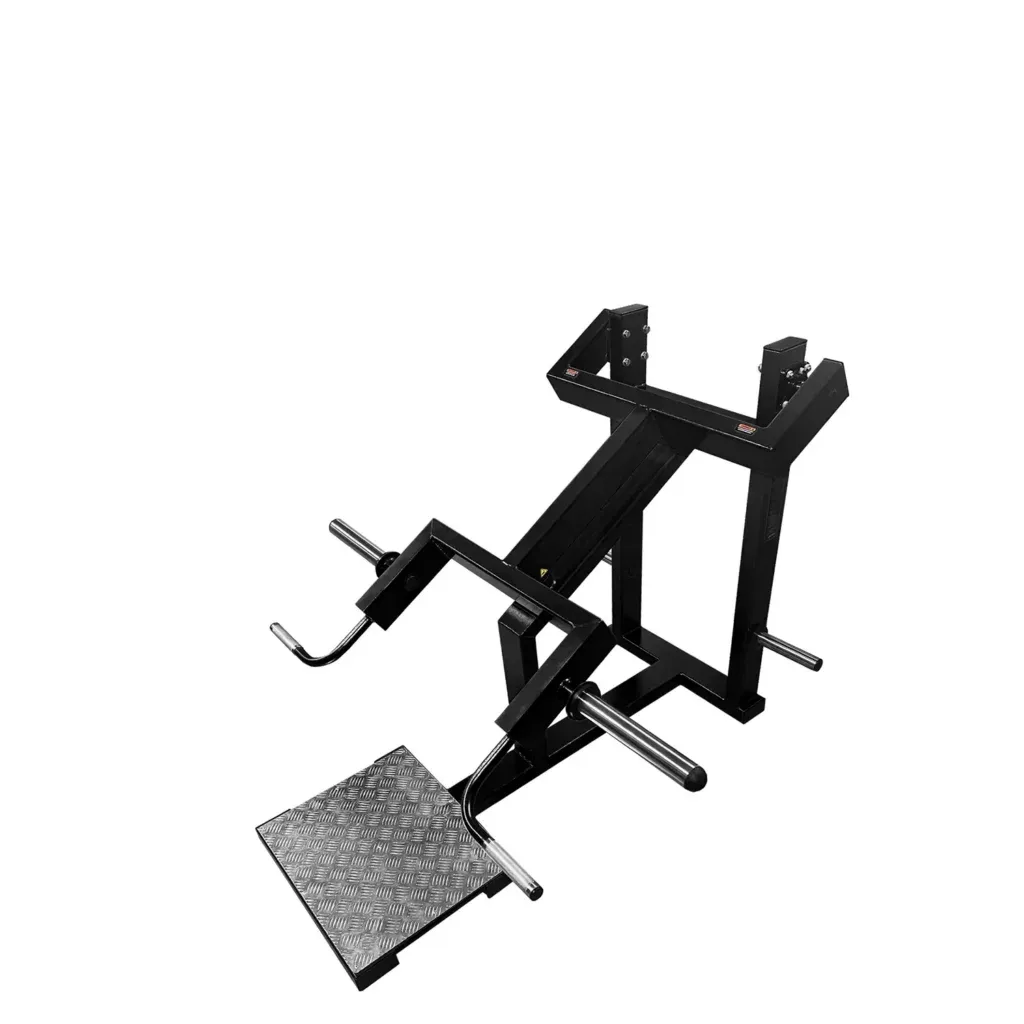
Leg Machine Names (Quads, Hamstrings, Glutes, Calves)
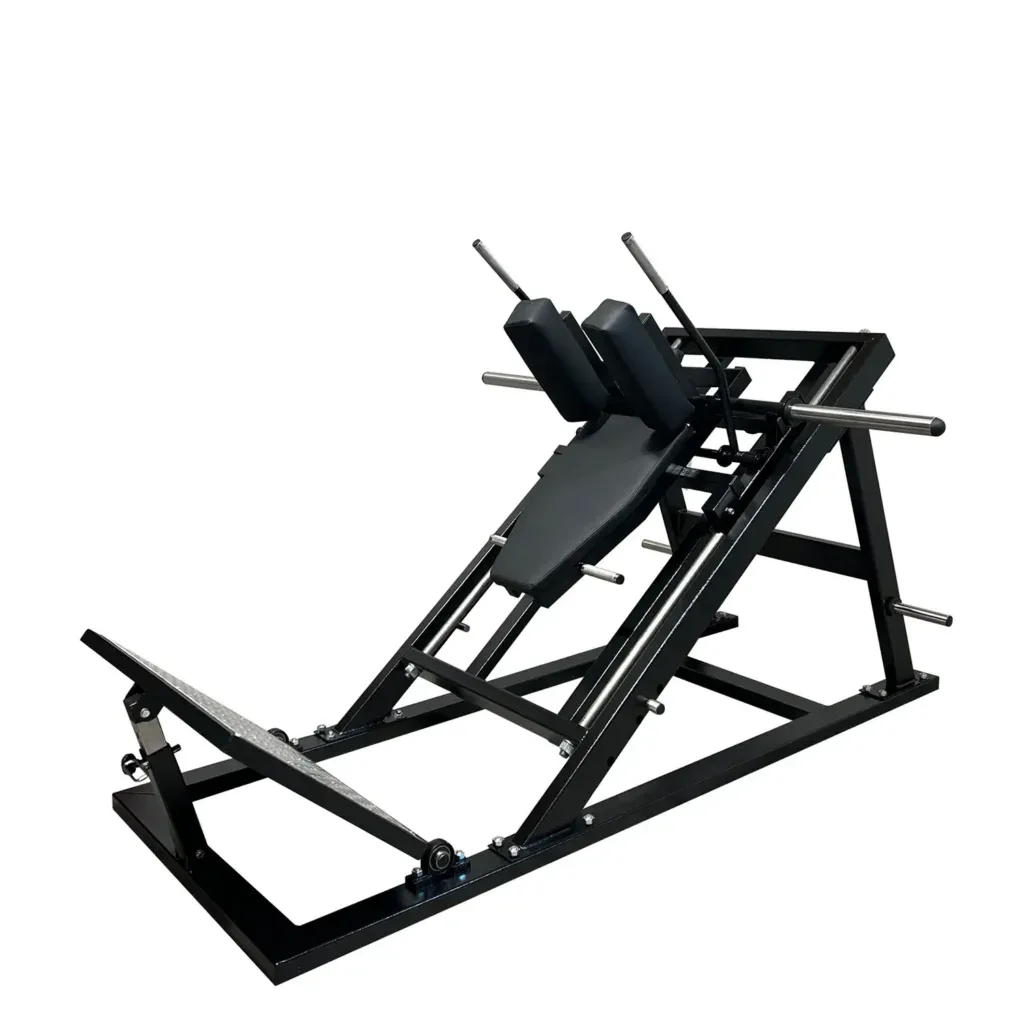 Hack Squat Machine – a guided squat pattern on an angled sled, taking balance out of the movement. Gym Factory's D1X is rated up to 800 kg on its heaviest frame, the kind of number that matters when a commercial floor has members loading plates past what a home-gym version was ever built for.
- Leg Press Machine – a seated or reclined pressing motion against a weighted sled. Gym
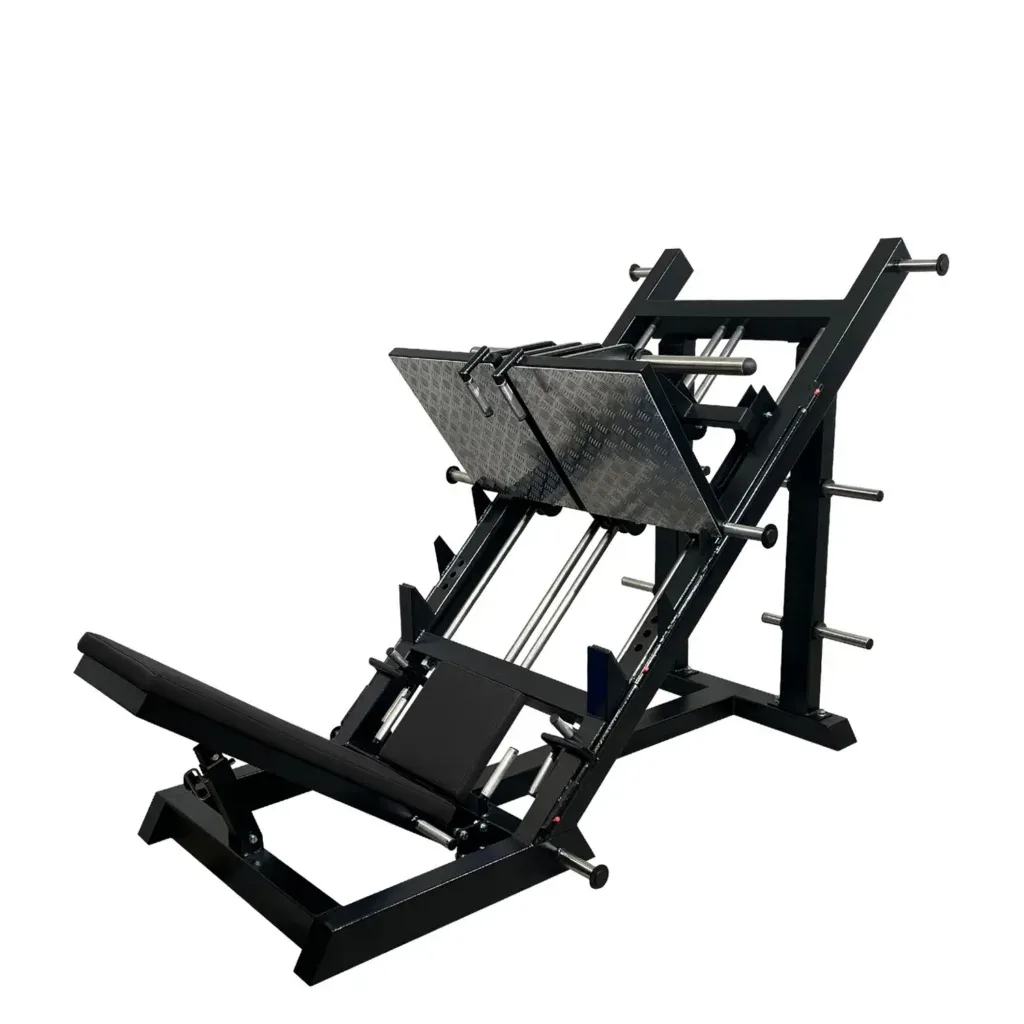 Factory's D3X tops out at 1,100 kg, and its split foot platform locks to work each leg independently, worth checking for on a spec sheet that just says "leg press" with no mention of unilateral training.
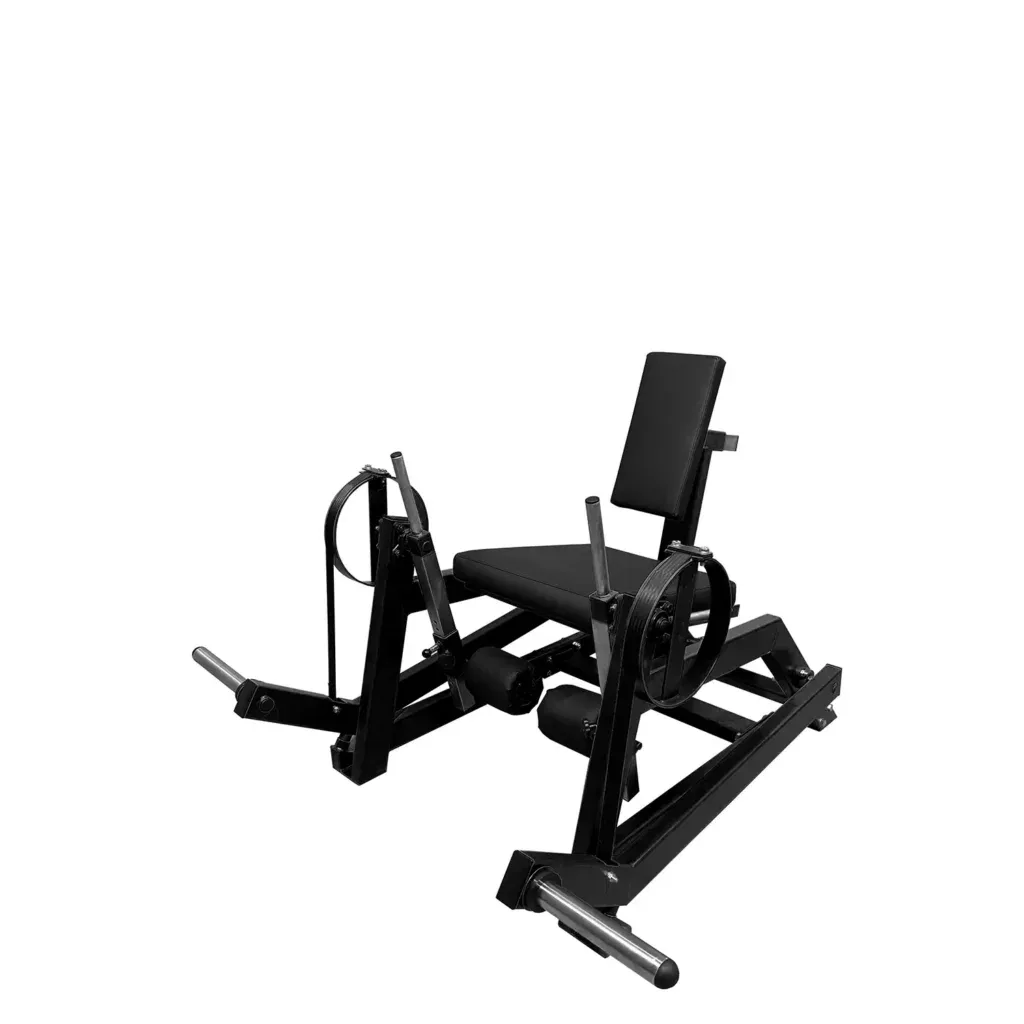 Leg Extension Machine – an isolation station for the quads, extending the leg against resistance from a seated position (Gym Factory's D6, rated to 280 kg).
- Leg Curl Machine – the hamstring equivalent, curling the leg against resistance, either
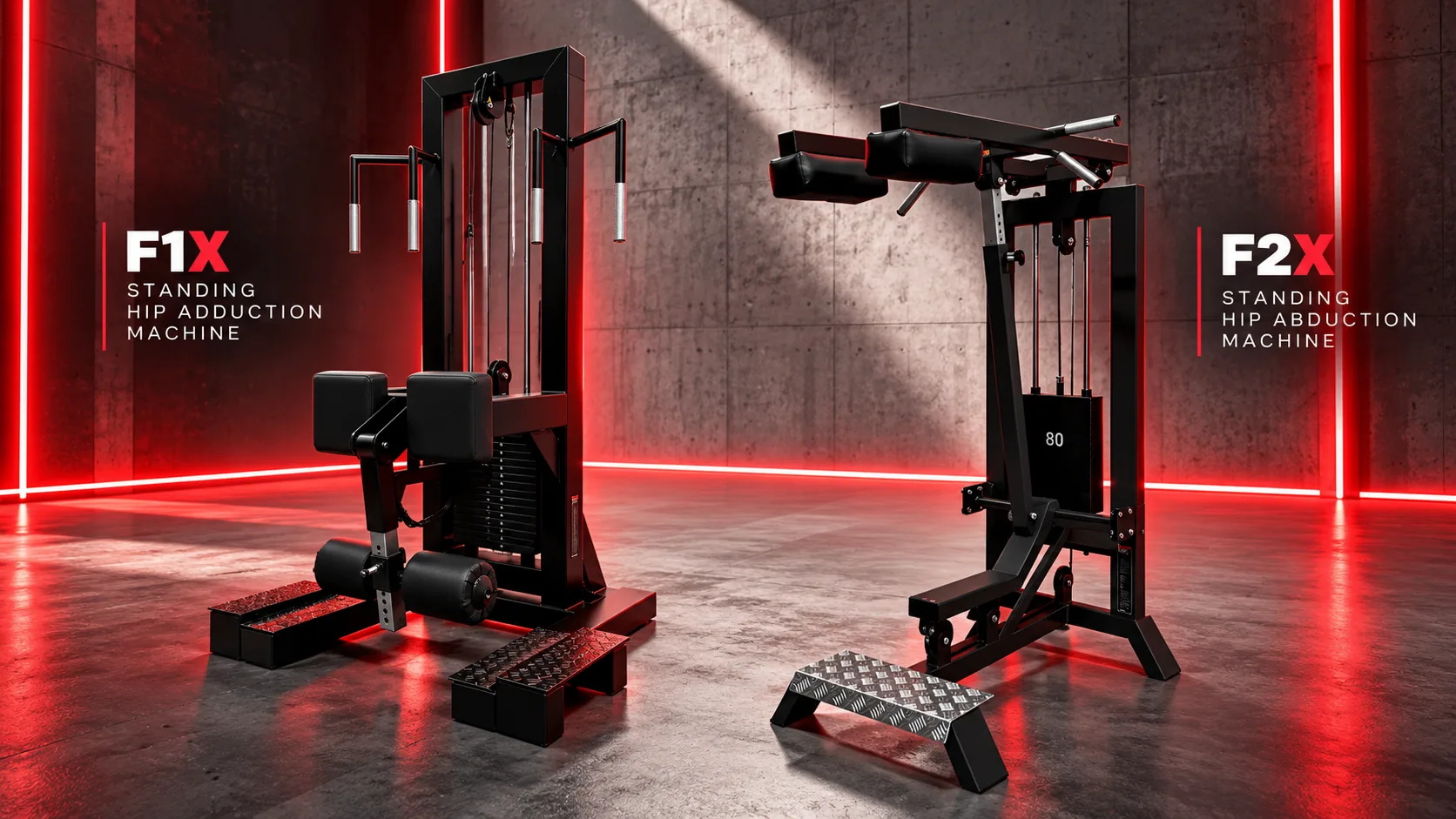 seated or lying. Gym Factory's M6X runs on a selectorized weight stack rather than plates, so load comes from the stack size chosen, not the frame rating.
- Calf Raise Machine – a standing or seated station isolating the calves (Gym Factory's O3X).
Cardio Equipment Names
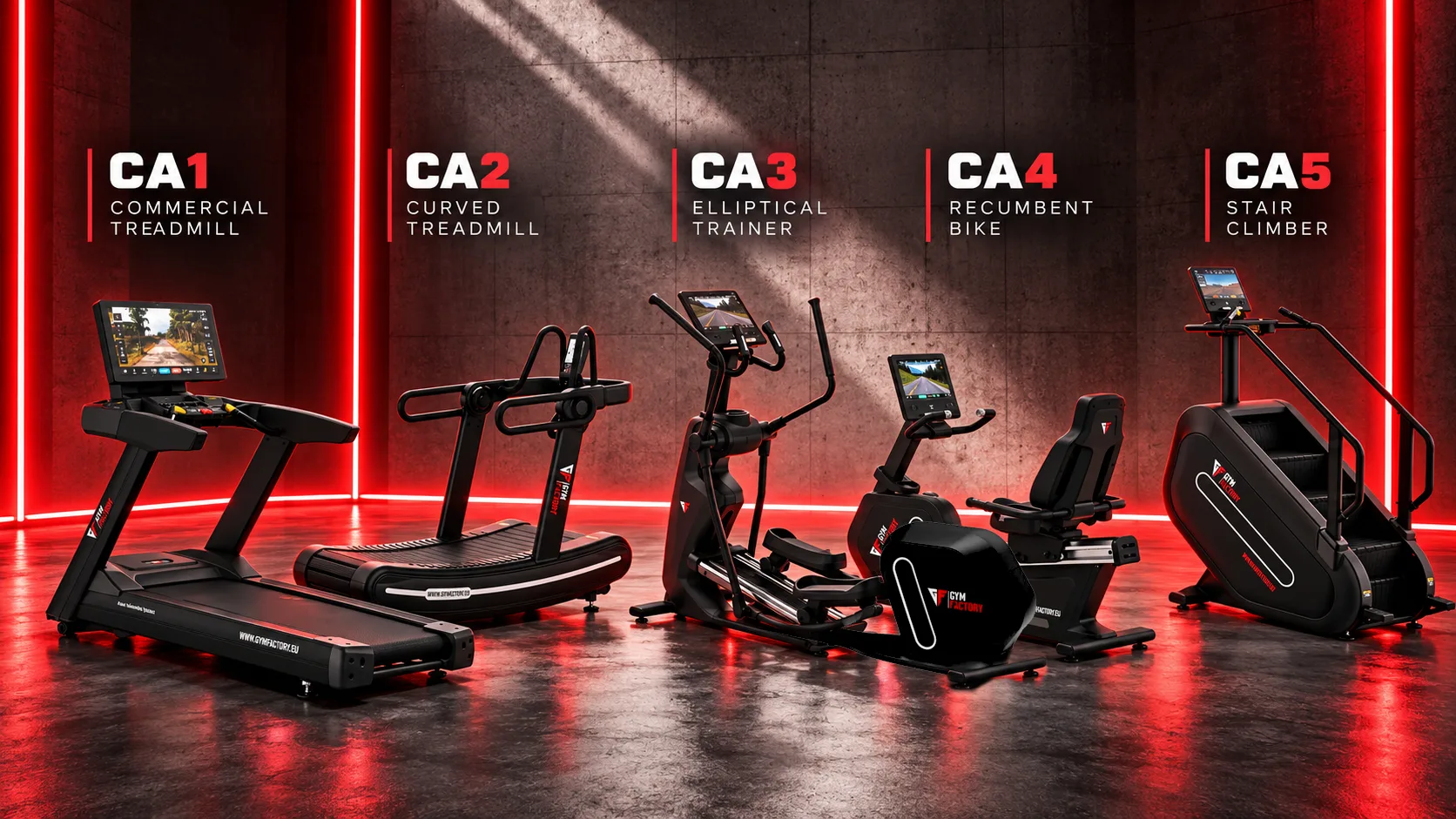
- Commercial Treadmill – built for continuous, multi-user daily use rather than occasional home sessions. Gym Factory's CA1 runs a 1 to 20 km/h speed range with incline from minus 3 percent to plus 18 percent, the range that separates a commercial deck from a home one.
- Curved Treadmill – a non-motorised, curved running surface driven by the user's own stride, popular for sprint and functional cardio work (Gym Factory's CA2).
- Elliptical Trainer – a low-impact, joint-friendly cardio machine combining a striding and pedalling motion (Gym Factory's CA3).
- Recumbent Bike – a reclined-seat cycling machine, often used for lower-impact or rehab-friendly cardio. Gym Factory's CA4 runs 40 levels of magnetic resistance, enough range to take a deconditioned member and a returning athlete on the same machine.
- Stair Climber – a stepping machine for intensive lower-body cardio (Gym Factory's CA5).
Commercial-Grade Construction Terms Worth Knowing
Names tell you what a machine does, construction terms tell you whether it can survive a gym floor.
- Commercial-grade / duty rating – shorthand for equipment engineered for continuous, multi-user daily use rather than occasional home use. There is no single industry-wide numeric standard behind the phrase, so treat it as a starting question for a supplier, not a guarantee, ask what the frame, moving parts, and warranty actually back up the claim.
- Steel profile (or gauge) – the dimensions and wall thickness of the steel tubing used in the frame, usually written as two measurements plus a thickness. Gym Factory's B5XX, for example, is available with either a 100x50x3mm or a 120x80x3mm profile, and across this catalogue the heavier profile consistently rates for more load, a hack squat on 120x80x3mm steel holds nearly double what the lighter frame does. A heavier profile means a sturdier, longer-lasting frame under daily commercial use, and it is manufactured in Lithuania under ISO-certified production, worth asking about directly when a "commercial-grade" claim has nothing behind it.
- Max load capacity – the maximum combined load, user plus plates or stack, the machine is rated to carry. This number swings hard by category even within one supplier's range, 280 kg on a leg extension, 800 kg on a hack squat, so it is never safe to assume one machine's rating tells you anything about another's.
- Tiered warranty – commercial manufacturers rarely offer one blanket warranty figure, they tier it by component, because different parts wear at different rates. Gym Factory's structure is a useful example of how this typically breaks down, frame and structural steel (30 years), mechanical moving parts such as bearings, pulleys and guide rods (36 months), cables and belts (12 months), and upholstery (6 months).
- ISO-certified production – means the manufacturing process itself is audited against an international quality standard, rather than a one-off marketing claim about the finished product.
- Ships disassembled – most commercial machines, Gym Factory's included, are shipped in parts with screws pre-installed to simplify assembly on-site, rather than fully built. A small number of fully-welded models cannot be disassembled at all, which affects delivery and access planning, worth asking before you book a lift or measure a doorway.